
View Our Products


Learn how to choose the right stone for a waterfall island. From veining and slab size to edge treatments and material options, get expert selection tips from AP Marble & Granite.
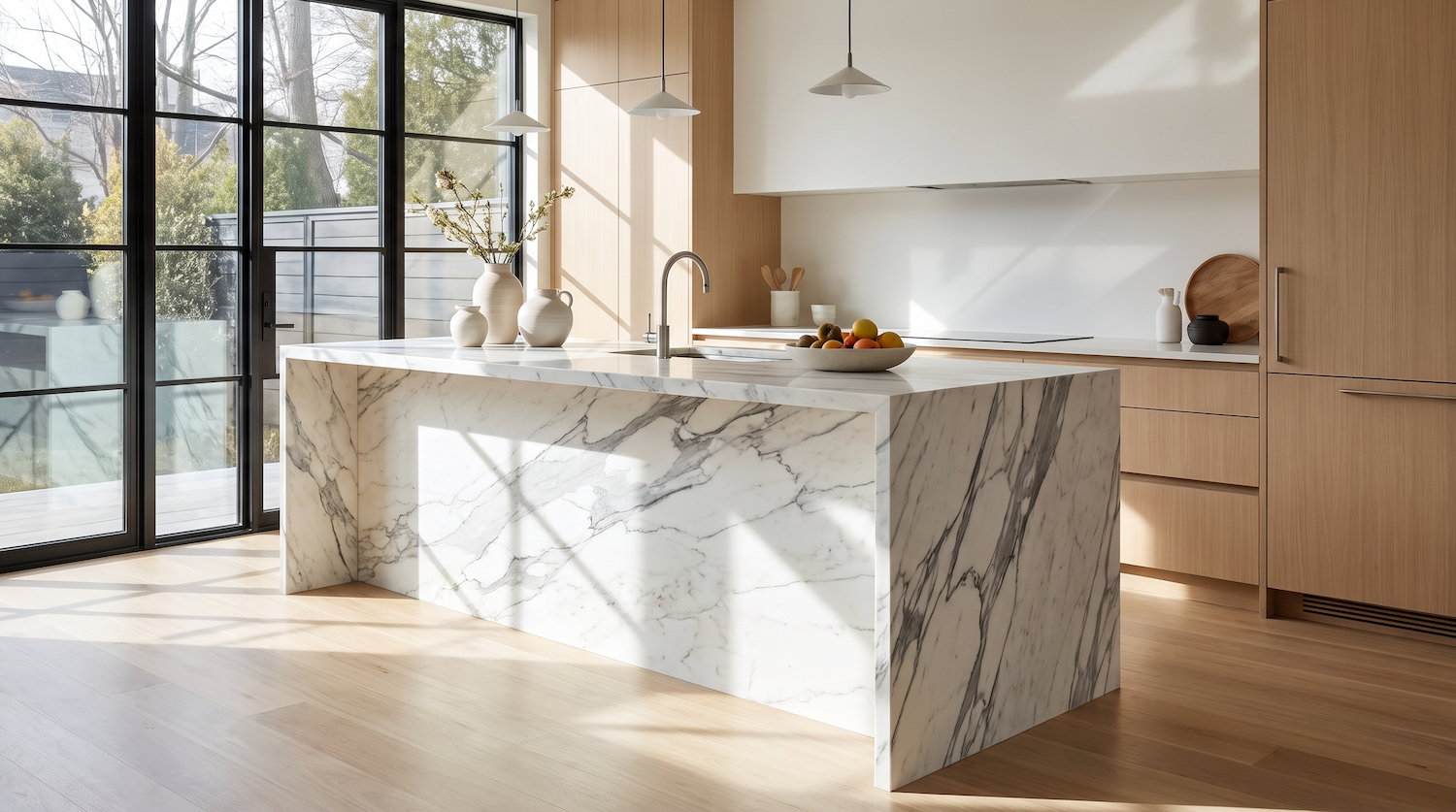
A waterfall island makes a statement that few other kitchen features can match. Instead of stopping at the countertop edge, the stone cascades down the sides of the cabinetry, creating an unbroken flow of material from surface to floor. The effect is striking, modern, and surprisingly versatile. It works just as well in a farmhouse kitchen as it does in a sleek contemporary space.
But choosing stone for a waterfall island is a different process than picking a standard countertop slab. The vertical panels put your stone on full display, and decisions about veining, color, slab size, and edge treatment matter more here than almost anywhere else in the home. If you're considering this style for your kitchen, here's what you need to know before you start shopping.
On a traditional island, the countertop sits on top of the base, and the sides are typically finished with wood paneling, paint, or decorative trim. The stone does its job on the horizontal surface, and that's about it.
A waterfall island changes the equation. The stone wraps over the edge and runs down to the floor on one or both sides, which means you're looking at three visible faces of material instead of one. That's a lot more stone to coordinate, and every seam, color shift, and pattern interruption becomes more noticeable.
This is exactly why a waterfall island can look absolutely stunning when it's done right and a little off when it's not. The key is understanding how stone characteristics play into the design before you commit to a particular slab.
When stone only covers a horizontal surface, the veining pattern is something you glance at from above. On a waterfall island, those veins travel across the top and then turn a corner and continue down the side panels. The movement in the stone becomes a defining visual element of the entire kitchen.
Some homeowners want dramatic, bold veining that draws the eye. Others prefer something quieter with subtle variation. Neither choice is wrong, but the decision carries more weight with a waterfall design because the stone is doing so much of the visual heavy lifting.
Stones with strong directional veining, like Calacatta marble or certain quartzite varieties, create a sense of flow when the pattern wraps around the corner. The effect can feel like a waterfall in the literal sense, with the lines of color appearing to pour over the edge. Stones with more scattered or cloudy movement, like some granite varieties, produce a different look that feels organic and textured without a strong directional pull.
The critical moment is the miter joint where the top meets the side panel. A skilled fabricator can book-match the stone at this seam so the veining appears continuous, as if the slab simply bent around the corner. This technique requires careful planning during slab selection and precise cutting during fabrication.
Here's a practical detail that catches some homeowners off guard: not every slab is large enough to produce a waterfall island without visible seams in awkward places.
A typical kitchen island might be eight feet long and three or four feet deep. Add two waterfall panels that drop 36 inches to the floor, and you're looking at a significant amount of material. If the slab isn't big enough, the fabricator has to piece sections together, and those extra seams can disrupt the visual flow you're trying to create.
Most natural stone slabs range from roughly 100 to 130 inches long and 60 to 75 inches wide, though sizes vary by stone type and quarry. Engineered quartz slabs tend to be more consistent in size, often running around 120 by 55 inches.
Before you fall in love with a particular stone, ask about the available slab dimensions. Your fabricator can map out the cuts needed for your specific island design and tell you whether the slabs you're considering will work.
Natural stone (marble, quartzite, granite) offers patterns that are genuinely one of a kind. Quartzite in particular has become a popular choice because it combines the dramatic veining of marble with significantly better hardness and stain resistance.
Engineered quartz gives you more control over the final appearance. The color and pattern are consistent across slabs, which makes matching panels easier and reduces the risk of surprises during fabrication. Quartz is also nonporous and very low maintenance.
The miter joint, where the horizontal countertop meets the vertical panel, is the centerpiece of the whole design. A clean, tight miter with well-matched veining creates the illusion that the stone is one continuous piece folding over the edge.
Most waterfall islands use a simple, squared-off edge profile to keep the lines crisp and modern. An eased edge with just a slight softening of the corner is another common choice. The thickness of the stone also affects the overall proportions.
Because a waterfall island puts so much stone on display, the color and tone of the material will influence the feel of your entire kitchen. Think about the stone color in relationship to your cabinetry, flooring, backsplash, and lighting. Visiting the stone yard to see full slabs under different lighting conditions will help you make a confident choice.
A waterfall island is one of those projects where the quality of your stone supplier and fabricator makes a measurable difference in the outcome. You want a team that will let you hand-select your slabs, walk you through the layout and vein-matching process, and handle the fabrication with the precision this type of installation demands.
At AP Marble & Granite, our team works with homeowners through every step of the selection and planning process for waterfall island projects. We carry a wide range of natural stone and porcelain and work with fabricators to make sure your project turns out exactly how you've envisioned. If you're ready to start exploring stone options for your kitchen, schedule a visit to our showroom and let's look at some slabs together.
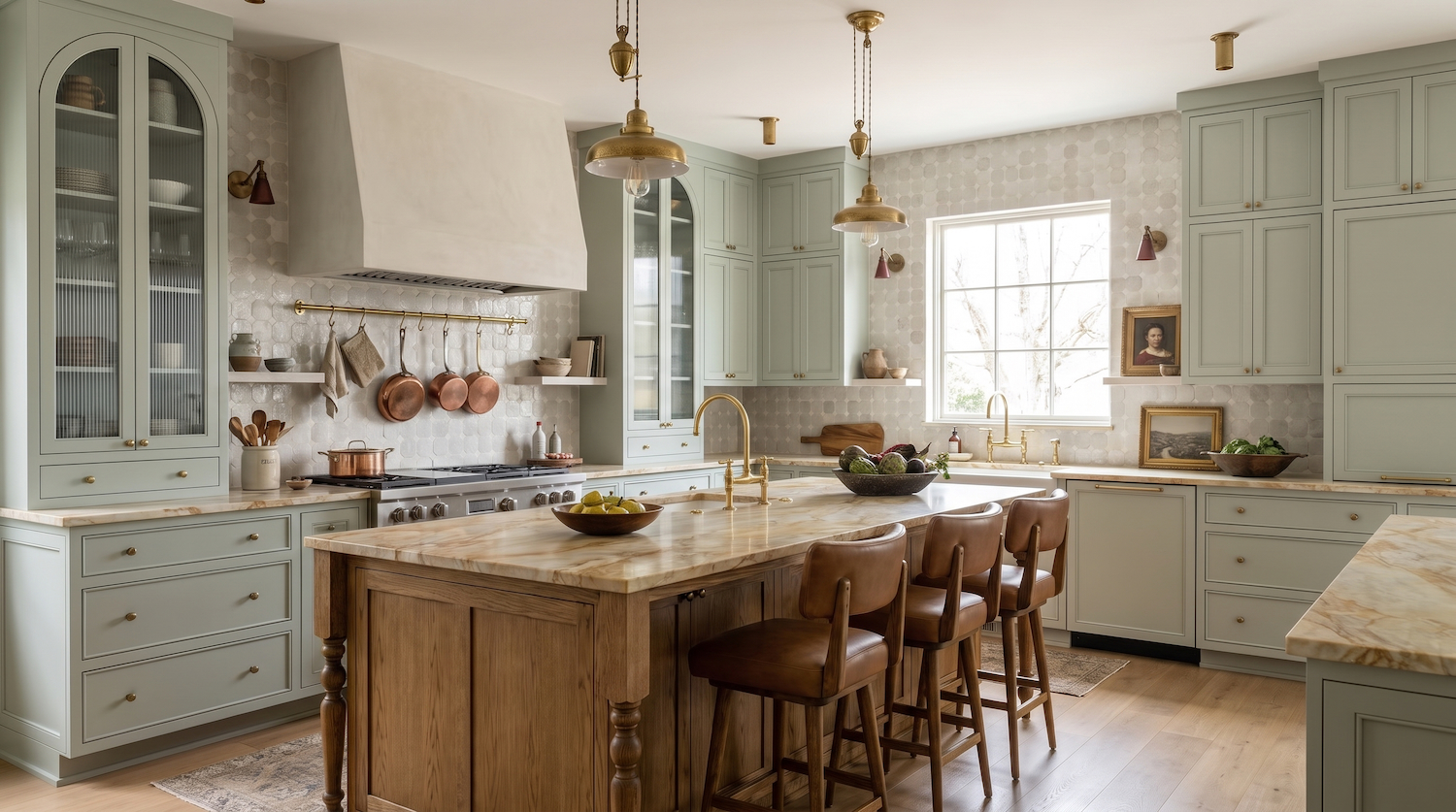
Discover how kitchen design is changing in 2026: layered color, leathered finishes, darker stone, and smaller islands in Metro Detroit kitchens.
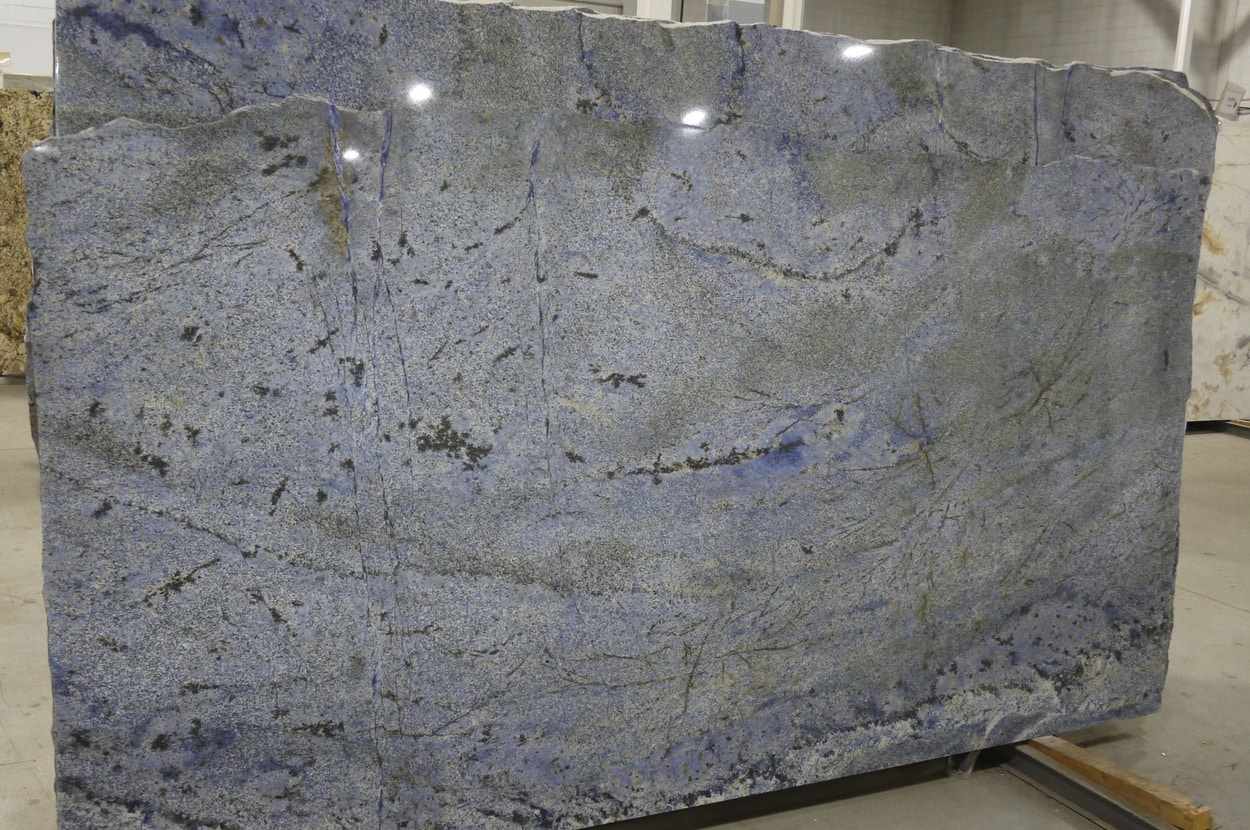
Explore eight exotic granite slabs most showrooms never stock, from royal blue Azul Bahia to Black Marinace, in our Metro Detroit stone showroom.