
View Our Products


Plan a luxury bathroom renovation around natural stone. Compare quartzite, marble, granite and onyx, then see full slabs at our Metro Detroit showroom.
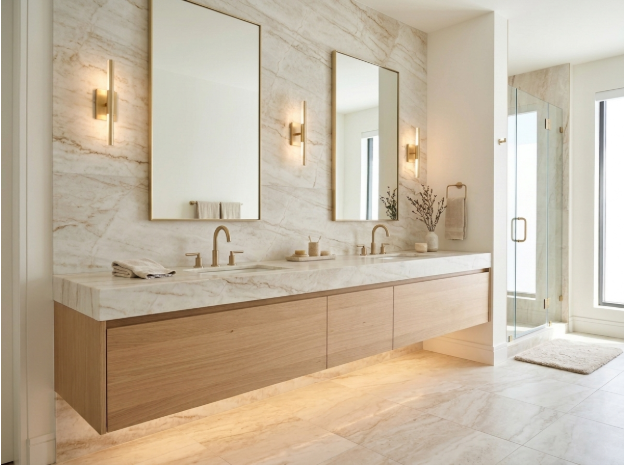
Most bathroom remodels start with a wishlist. New vanity, new tile, better lighting, maybe a bigger shower. Sometimes finishes aren’t discussed until the later stages. This can result in a design that feels disconnected. A standout luxury bathroom renovation should begin with the colors, textures, and all finishes intentionally combined to create a cohesive look.
That's the idea behind designing with natural stone in the center. In a luxury bathroom renovation, the stone isn't the last thing you pick to match the tile. It's the first decision, and every other choice follows it.
What Does "Stone in the Center" Mean?
Designing with stone in the center means choosing one natural stone slab as the focal point of the bathroom and letting it set the color palette, the finishes, and the layout. That slab might become a floating vanity top, a full shower wall, a tub surround, or a single feature wall behind the mirror.
Once that piece is chosen, the decisions get simpler. The veining tells you whether your hardware should be brass or matte black. The background color tells you whether your cabinetry should go warm or cool. You stop picking from a thousand tile samples and start editing toward one look.
Bathrooms are kinder to stone than kitchens are. There's no hot cookware and much less acidic food. But there's plenty of water, steam, soap, and the occasional bottle of perfume. Here are some of the best natural stone slabs you can use in a bathroom renovation:
Quartzite is the workhorse for homeowners who want the look of marble without as much worry. It sits around 7 on the Mohs scale, so it resists scratches and etching far better than marble does. Patterns range from soft white and gray to bold blues and greens. Our Fantasy Blue quartzite, for example, makes a calm, watery vanity top that pairs well with white oak cabinets. If you want something you can use every morning and not baby, start here.
Marble is the classic choice, and for good reason. Nothing else has quite the same soft glow. It's also softer (around 3 on the Mohs scale) and will etch if acidic products sit on it. In a primary bath used by two adults, that's usually manageable. A honed finish hides etching better than polished, and a good sealer helps with staining. If you're weighing the two, our post on Calacatta quartzite vs. Calacatta marble breaks down the tradeoffs side by side.
Granite rarely gets called "luxury" anymore, which is a shame. Some of the most dramatic slabs in our warehouse are granites, with deep blues, golds, and crystal patterns you won't find in any other material. Granite is also very forgiving, at roughly 6 to 7 on the Mohs scale. For a powder room that guests will see, an exotic granite vanity can be the most memorable thing in the house.
Onyx is the showpiece stone. It's translucent, which means it can be backlit so the whole slab glows. That makes it a favorite for feature walls behind a freestanding tub or a vanity backsplash. It's also delicate, so we usually suggest it for vertical surfaces rather than a vanity top that gets daily wear. Our post on backlit countertops covers which stones can be lit and how designers use them.
Some people fall in love with a stone and design their bathroom around it; others decide on where they want to use the stone before deciding on the material. Having an idea of where to display your natural stone also helps guide the decision on what kind of material you want to use.
If you’re using natural stone slabs for your bathroom renovation, you’re most likely going to use it as a countertop. Which makes the vanity top the most common place to start. The edge profile of the countertop makes a big difference in the design style of your bathroom. A thicker edge profile or a mitered apron makes even a simple vanity look custom. Double vanities are a great place to use a slab with strong movement, since the pattern gets room to run. The countertop can also be continued on the wall behind as a continuous statement piece or a shorter yet functional backsplash.
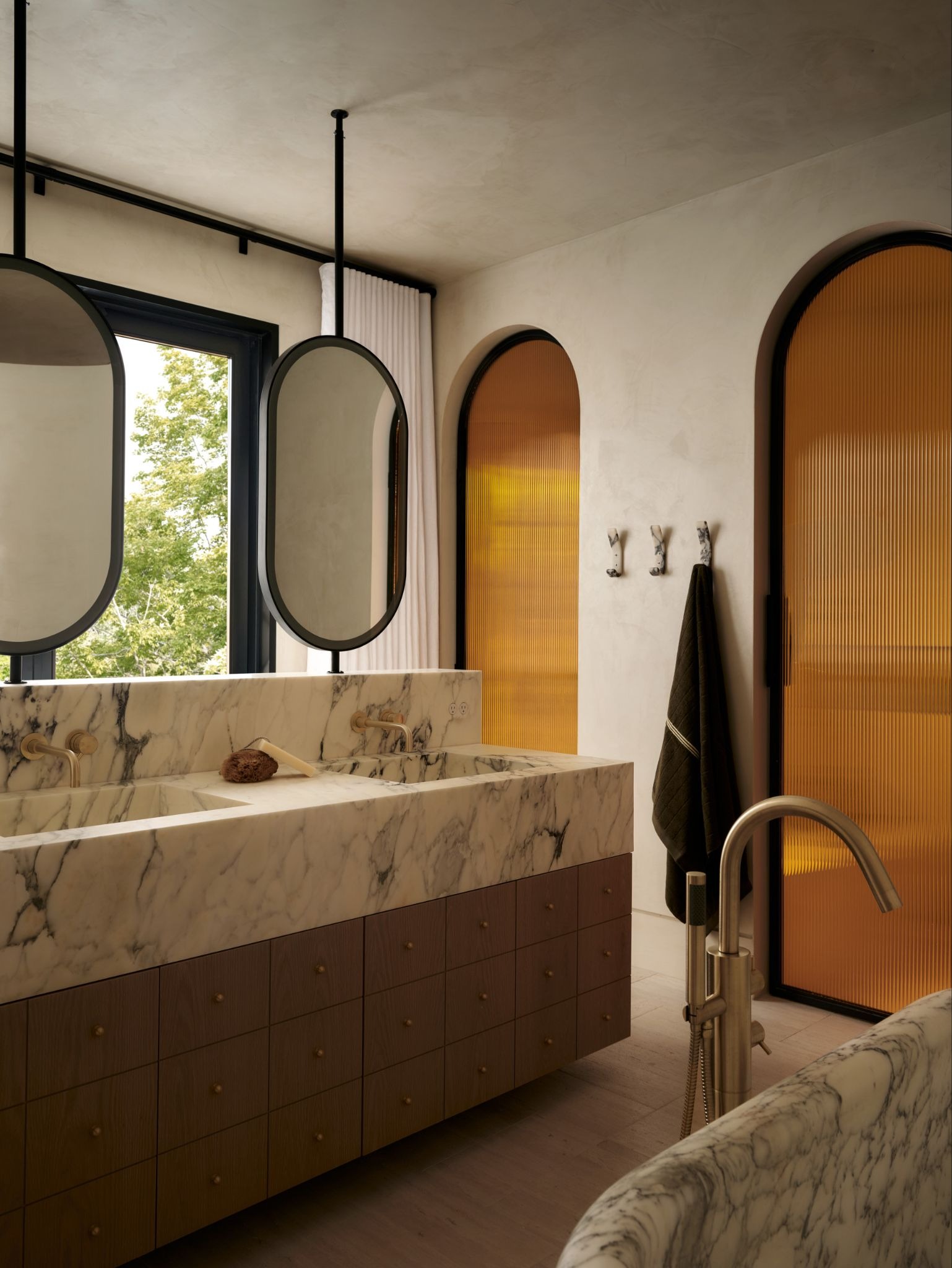
Bathroom with a marble countertop featuring a mitered apron edge profile. Design by Montana Image courtesy of Labelle Design | Photography by Patrick Biller https://www.instagram.com/p/Db8Hyabkeso/
The shower is another place where your natural stone slab can be at full display. Shower walls that use a single slab have fewer grout lines than tile, which means they’re cleaner both visually and literally (in the sense of less grout to clean). A bookmatched pair on the back wall turns a shower into the main event. Not every stone bookmatches well, so ask about the options before deciding on a stone.
If you’re planning on using a drop-in tub, wrapping it in the same stone as the vanity ties the room together. With a freestanding tub, a stone feature wall behind it does the same job. Tubs crafted out of natural stone have also been trending in ultra-luxury designs.
Natural stone also makes a stunning feature wall when used as a fireplace surround. The image below showcases a beautiful application of dark and dramatic natural stone as both a fireplace surround and feature wall behind a tub. Maori Black or Mandark granite could be used to achieve a similar effect.
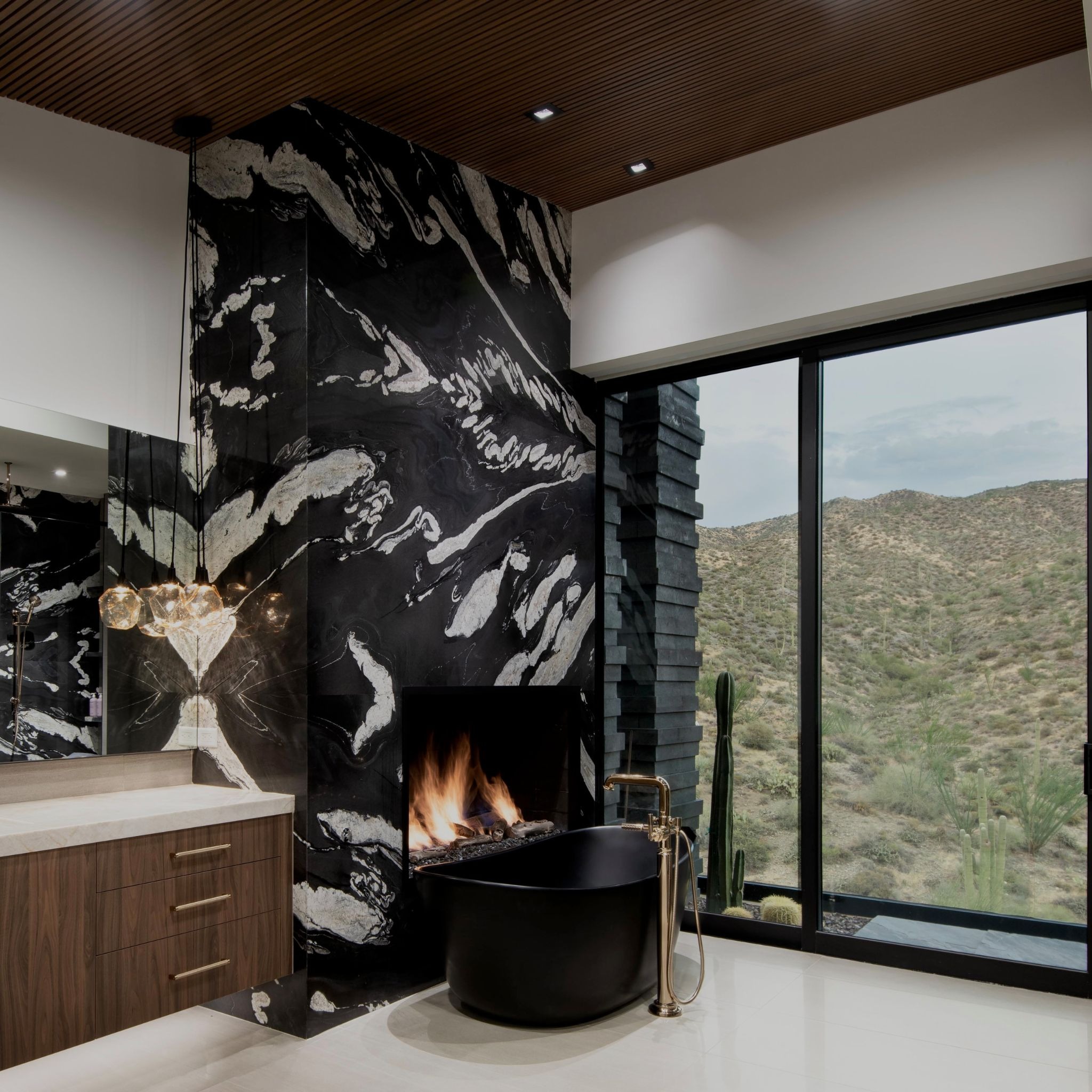
Image courtesy of Concierge Auctions | Seven Sisters Estate, Cave Creek AZ Facebook
Stone floors are beautiful but need a honed or leathered finish so they aren't slippery when wet. Many homeowners use the hero slab on the walls and vanity and choose a quieter coordinating stone or tile for the floor.
Starting off with a natural stone and designing the room around it is what makes your bathroom feel custom. Once you decide on a slab, bring a photo of your slab, or better yet a sample, to every other decision.
Pull your paint color from the background of the stone and pick metal finishes that echo the warmest or coolest tone in the pattern. Keep cabinetry fairly simple if the stone is busy, and let the cabinetry carry more color if the stone is quiet. Lighting matters more than people think, too. Warm LED strips under a floating vanity or above a shower niche will bring out the depth in quartzite and marble. When done right, these design choices highlight the best features of your natural stone and create a truly unique aesthetic.
One rule we repeat often is to let one thing be loud. If the vanity slab has dramatic veining, keep the shower tile plain. If the shower wall is the star, choose a calmer vanity top.
A few practical things will save you headaches:
Quartzite is the best all-around choice for most homeowners because it's hard, resists etching, and comes in marble-like patterns. Marble works well too if you're comfortable with some patina over time.
Yes. Marble has been used in showers for centuries. Choose a honed finish, seal it regularly, and avoid acidic cleaners. Many people find the gentle wear part of its charm.
Onyx works best on walls and feature surfaces where it won't take daily wear. Backlit onyx behind a tub or vanity is a popular way to use it.
It depends on how many surfaces you plan to cover. A single vanity may need part of one slab, while full shower walls often need two or more. Your fabricator or designer can confirm once they have your layout.
The best way to design a bathroom around stone is to stand in front of the slab. AP Marble & Granite has served homeowners, designers, and fabricators across Southeastern Michigan for more than 30 years, and our showroom is over 40,000 square feet, the largest in Metro Detroit. Bring your floor plan, your cabinet samples, or just a few photos you love, and we'll help you find the slab to build around. Call us at (586) 783-9434 or schedule an appointment to visit.
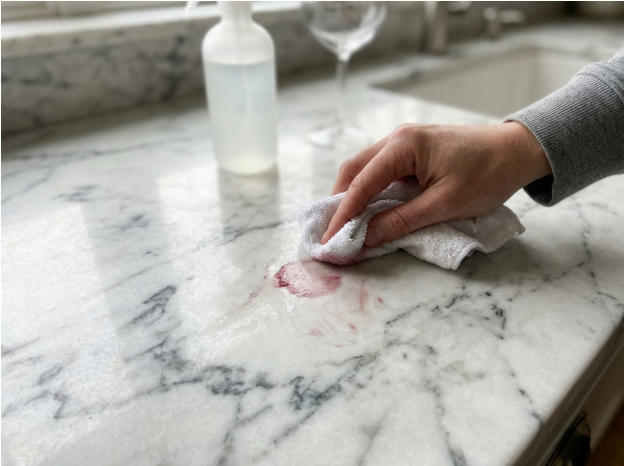
how to clean marble countertops, sealing marble countertops, marble stain removal, honed vs polished marble
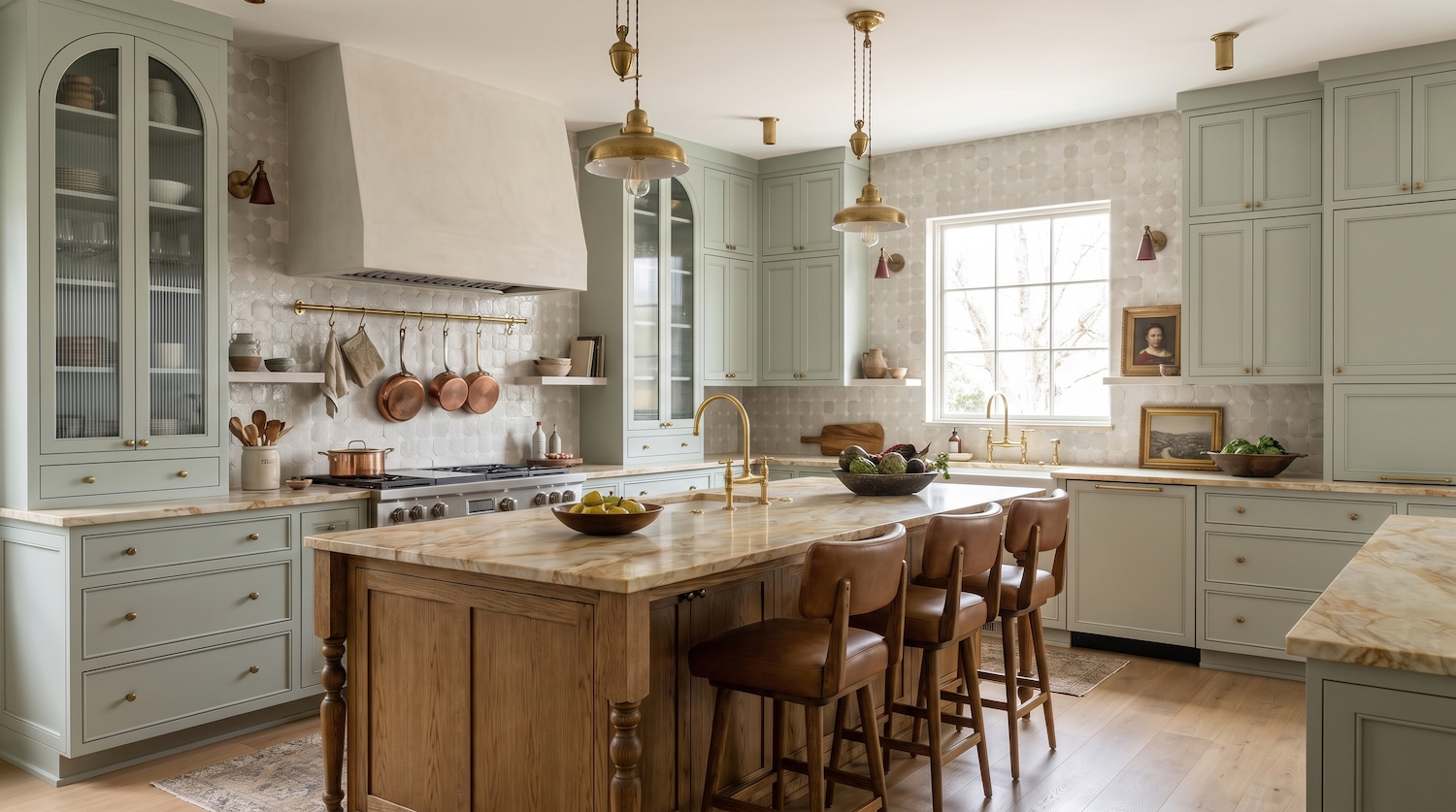
Discover how kitchen design is changing in 2026: layered color, leathered finishes, darker stone, and smaller islands in Metro Detroit kitchens.