
View Our Products


how to clean marble countertops, sealing marble countertops, marble stain removal, honed vs polished marble
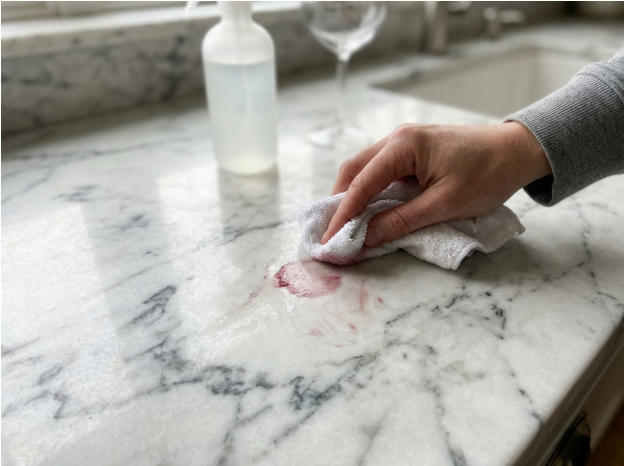
Ask ten people about marble and you'll hear two stories. One person loves their marble kitchen and says it only gets better with age. The other swears it was ruined by a glass of lemonade. Both are telling the truth. The difference usually comes down to finish, expectations, and a few simple habits.
Good marble countertop care isn't complicated. It's mostly knowing what marble is, what it doesn't like, and what to do when something does go wrong. These are the same tips we give homeowners at our Metro Detroit showroom before they take a marble slab home.
Marble is a metamorphic rock made mostly of calcite, the same mineral found in limestone. That calcite is what gives marble its soft glow and flowing veins. It's also what makes marble react to acid.
On the Mohs hardness scale, marble sits around 3. Granite is closer to 6 or 7, and quartzite is around 7. So marble is softer and can scratch more easily. It's also porous, which means liquids can soak in and leave a stain if they sit too long. Neither of these is a reason to avoid marble. They're just the rules of living with it.
These two get confused all the time, and they need different fixes.
Etching is a chemical reaction. When something acidic like lemon juice, vinegar, wine, tomato sauce, or soda touches marble, it dissolves a tiny bit of the surface. You'll see a dull spot or ring, usually lighter than the stone around it. Etching is damage to the surface, not something that soaked in, so no cleaner will remove it.
Staining happens when a liquid absorbs into the stone and leaves color behind. Coffee, tea, cooking oil, and red wine are the usual culprits. A stain is often darker than the stone and sits below the surface.
Quick test: run your finger over the spot. If it feels rough or looks dull from an angle, it's probably an etch. If the surface feels smooth but the color is off, it's a stain.
The finish you choose changes how your marble ages more than almost anything else.
Polished marble has a glossy, reflective surface. It shows off the veining and color beautifully. It also makes every etch mark easy to see, because a dull spot stands out against the shine. Polished marble is a great fit for bathroom vanities, fireplace surrounds, and other surfaces that don't see much acid.
Honed marble has a smooth, matte surface. Because it's already matte, etch marks blend in much better. Honed marble can be a little more prone to staining, so sealing matters more. Most homeowners who want marble in a busy kitchen choose a honed finish.
Leathered marble has a soft, textured feel. It hides both etching and fingerprints well and has a more relaxed, lived-in look. Not every marble is available leathered, so ask when you visit.
If you love the look of marble but know your household is hard on counters, it's worth comparing it against quartzite. Our post on Calacatta quartzite vs. Calacatta marble walks through that choice.
Day to day, marble needs very little. Wipe it with warm water and a soft cloth, or use a pH-neutral cleaner made for natural stone. Dry it afterward so water spots don't form.
What to skip: vinegar, lemon-based cleaners, bleach, ammonia-heavy glass cleaners, and abrasive powders or scrub pads. Many all-purpose sprays are acidic or alkaline enough to dull the surface over time. If the label doesn't say it's safe for marble, don't use it.
A few habits go a long way. Use coasters under glasses, especially anything with citrus or alcohol. Set oils and vinegars on a small tray instead of directly on the counter. Use cutting boards. Wipe spills right away instead of letting them sit overnight.
Yes, in most cases. Sealing is one of the most common questions we get, and the short answer is that a quality penetrating sealer helps marble resist stains. It gives you more time to wipe up spills before they soak in.
What sealing won't do is stop etching. Sealer sits in the pores of the stone, not on top as a hard coating. Acid will still react with the calcite at the surface. So think of sealer as stain protection, not acid protection.
How often to reseal depends on the stone, the finish, and how much you use the counter. Many marble kitchens need sealing every 6 to 12 months. Use the water test to check: put a few drops of water on the counter and wait 15 minutes. If the water still beads, you're fine. If it darkens the stone or soaks in, it's time to reseal. Your fabricator can seal the counters at installation and recommend a product for ongoing use.
Most marble stains can be lifted with a poultice, a paste that pulls the stain back out of the stone as it dries. The right mix depends on the stain.
Oil-based stains (cooking oil, butter, lotion): mix baking soda with water into a thick paste, spread it over the stain about a quarter inch thick, cover with plastic wrap, and let it sit 24 to 48 hours. Remove, rinse, and repeat if needed.
Organic stains (coffee, tea, wine, fruit): on light-colored marble, a poultice made with hydrogen peroxide and a few drops of ammonia often works. Test a hidden spot first, since peroxide can lighten darker stones.
Water rings and hard water spots: these are often light etching. A marble polishing powder can help on polished finishes. Deeper etching may need a stone restoration professional to re-hone or re-polish the surface.
For a step-by-step version with more stain types, see our guide on how to remove stains from marble countertops.
Marble lasts for generations. Some of the oldest buildings in the world are made from it. In a home, the stone itself will outlive the cabinets. What changes is the surface. Keep up with sealing, clean with the right products, and protect it from acid. Every few years, a professional can re-hone or re-polish worn areas and make the surface look close to new again. Many homeowners also come to enjoy the soft patina that builds over time. In older homes around Grosse Pointe and Birmingham, it's common to see marble that's been in use for decades and still looks right.
It's best not to. Many disinfecting wipes and glass cleaners contain chemicals that can dull marble over time. Use a pH-neutral stone cleaner instead.
Do the water test. If water stops beading on the surface and starts to darken the stone within 15 minutes, it's time to reseal.
Honed is usually the better choice for kitchens because etch marks blend into the matte surface. Polished works well in bathrooms and lower-traffic areas.
Light etching on polished marble can often be buffed out with marble polishing powder. Deeper etching may need professional re-honing or re-polishing.
The best way to choose marble is to see it in person and talk through how you actually live in your home. AP Marble & Granite has helped homeowners, designers, and fabricators across Southeastern Michigan for over 30 years, and our 40,000+ square foot showroom is the largest in Metro Detroit. Browse our stone collection, then call (586) 783-9434 or schedule an appointment to see our marble slabs up close.
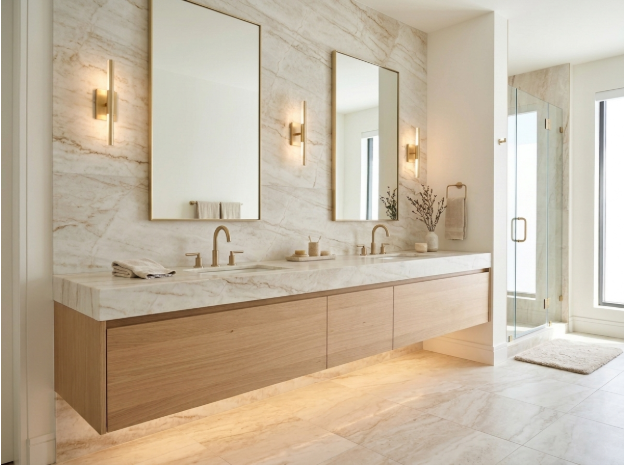
Plan a luxury bathroom renovation around natural stone. Compare quartzite, marble, granite and onyx, then see full slabs at our Metro Detroit showroom.
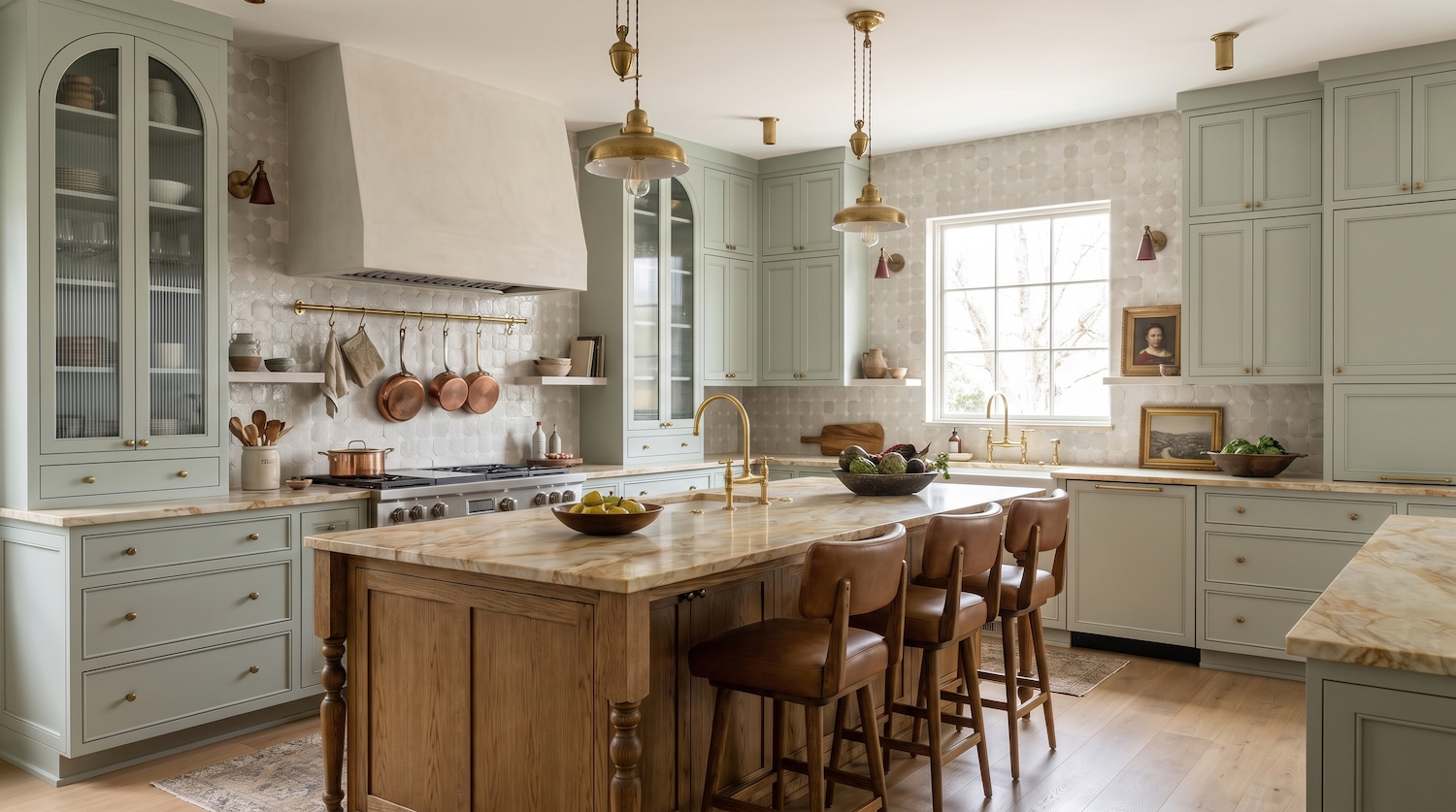
Discover how kitchen design is changing in 2026: layered color, leathered finishes, darker stone, and smaller islands in Metro Detroit kitchens.